

By John Ayers
Some of you probably met Claude the same day that I did.
Tuesday, May 5th in Valencia, Claude was introduced to us at the 2026 IH Directors’ Conference. He was part of the team that came with Rob Dixon, who gave us such a good introduction to Artificial Intelligence.
For some reason, I immediately got on well with Claude. We seemed to share a lot of the same opinions, which is strange because of the difference in our age, more than 80 years if I’m being frank. Anyway, I’ve kept in touch with him since that day in Valencia and I often ask him for advice. Actually, just yesterday I sent him a message to check if he minded my using his name in the title of this article. His reply was typical: “Wow! Great title! I’m intrigued to know what comes next. If you want any help writing, then just let me have a bit more information about Craig and I’ll forward something to you.” Just the sort of answer that a school owner would love to have from a DoS, especially seeing that I had sent the mail to him at 10.00 p.m.
Craig (not his real name!), on the other hand, is a different kettle of fish. I first met him in Livorno, a seaside town in Italy, exactly on the morning of September 1st, 1986. Craig was my first DoS. I had just bought a small language school in Livorno for reasons which are still mysterious to me and I inherited Craig as DoS. It was not a good start. I was new to language teaching but I knew that this was not what I wanted and I felt sure that this was not what the market wanted. Craig was embarrassingly awkward in his gestures; condescending and over-simplistic in his explanations, often drifting into terrible Italian; his lesson plan was non-existent and followed the whims of the class…
Claude versus Craig (Artificial Intelligence versus the Human Factor)
“It is impossible to subordinate human personhood to the dictates of positivity entirely. Without negativity, life degrades into ‘something dead’… Life that consists wholly of positive emotions and the sensation of ‘flow’ is not human at all. The human soul owes its defining tautness and depth precisely to negativity…” (Byung-Chul Han)
The fact is that I was completely wrong about Craig and those market forces. Craig wasn’t ‘dead’. The reason that I remember him is because he was the most popular teacher that I have ever met. He held my small school together in a way that no one has done since. If you asked me what magic word I would use to describe him I would say that he ‘cared’; he cared about his students more than he cared about his own image. To tell the truth, I think that the idea of continuous professional development never crossed his mind (but I am talking about 40 years ago). “Life that consists wholly of positive emotions and the sensation of ‘flow’ is not human at all.” Could it be that the secret of success is to be found somewhere in the negativity? Possibly the positive healing balm of a well-prepared lesson plan kills any hope of excitement, of adrenaline running. Possibly going with the positive flow, from B1 to B1 plus to B2 to C1, is only for the chosen few, leaving for the many only a frustrated sense of negativity. Possibly the tautness and depth was exactly there, in Craig’s fragility.
But that was forty years ago and now I have met Claude and Claude has asked for information about Craig and the above is what I sent him. Claude’s answer was immediate and, as usual, complimentary.
“John, as always, you are very astute. You have chosen a worst-case scenario and yet have pinpointed the one strength that I cannot ever have. Caring! Weakness; fragility; negativity; the humiliation of getting things wrong; and hence the ability to care; none of this is possible in my world. Everything we do is about getting things right, finding the positivity, discarding the negativity. We can invent sympathy but empathy will always be beyond us.
But look at things from my point of view. You need language teachers. Are you really prepared to sacrifice everything that I can offer just for the sake of this one word, “caring”? I’m a quick learner, and once pointed in the right direction, I can generate my own training scheme. After that, I’m available 24 hours a day, cheap and always cheerful. With small kids I’m infinitely patient. I can tell them stories, correct their pronunciation, invent games, even make them laugh, and I never get tired. With teens, you say that I can’t care, but for that same reason I don’t judge. I can distinguish differences, but judgement is not in my make-up. For the teens, learning without the risk of being judged is something that they desperately need and that I offer naturally. With adults online, you know yourself that I am already ahead of you. Add to this the fact that my lessons are always totally inclusive, feedback to every student is immediate, completely accurate and unbiased, and possibly you might be ready to offer me a post.”
These might not be Claude’s exact words back to me, but they’re close enough to give you a sense of the ‘personality’ we’re dealing with here.
Craig is not omnipresent, nor is he available 24/7, but let me quote, as a reply, something that he wrote a good many years ago.
“Caring, creating that vital moment of excitement, that space where learning can take place, that is our profession. Our job is to help people learn. But, because we are ‘teachers of English as a foreign language’ the learning that we are involved in is different to that of most teachers. The people that we help are all ages; small children, children, teenagers, young adults, older adults, but they are people, not machines, people with all their fragilities, which they place in our hands. The learning that takes place, or sometimes doesn’t take place, is more visible than in most academic subjects. This visibility means that the intimate process of learning is exposed to public gaze. As a student, old or young, you have to perform, (to dance in public) – speaking, listening, showing off what you have learned. And so the student, old or young, can be hurt and then real healing is necessary, and that is when we need our teaching skill. Learning is an intimate, secret process, more to do with fragility and negativity than with the positive flow. Every moment is different, every moment is mysterious, every moment should be and can be not a result but a small healing of the soul, and then, as teachers, we are living the good life, a life that is good.”
So please, dear Claude, don’t try to take our jobs away from us. We can accept your help. All your knowledge, your ability to organise and to analyse, your ability to distinguish differences, all of this can be an enormous help, but we are part of a world where caring is important and this, to use the language of your world, is non-negotiable.
Will the world of language teaching be taken over by AI-driven apps, devices, humanoid robots during the next five years or will human teachers manage to keep their jobs?
Claude is the voice of Anthropic, one of the leading companies producing Artificial Intelligence material. Claude is very cheap – for now, at least! – and always cheerful. He is immensely knowledgeable, infinitely patient, untiring and relentlessly banal.
Craig is human and, therefore, frail and vulnerable. He is expensive and may often be off sick. He is never banal but might often be quirky. One way or another he attracts students because he is real. One way or another he attracts them because he cares.
Language teaching is a commercial activity. Choices will have to be made. We are going to have to fight hard for our jobs! But we must focus on what we can do that technology can never replace. We must build from there – rebuild, if needs be – and keep giving our students exactly what they can never get from a computer. We need to be Craig, and leave Claude to do his thing, over there, away from us. We are only human, but it’s still our greatest strength.
Biography
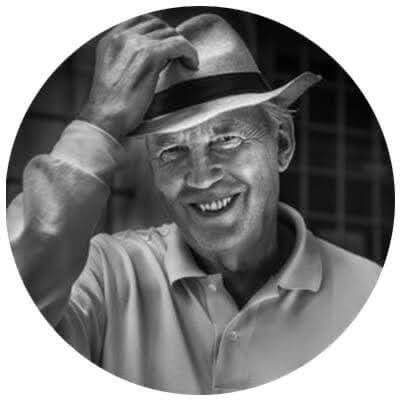
Graduated from Durham University in 1963 and then taught for 3 years at Kailahun High School, Sierra Leone. Dip Ed from Cambridge University and CELTA qualification from IH London. From 1986 to present, owner/director of British School Pisa (now British School International House Pisa). Past President of SEAL Italy (the Italian branch of SEAL worldwide (Society of Effective Affective Learning). Founder member and past Vice President of AIBSE (Associazione Internazionale British Schools of English); President of BSA: Next Generation Learning.


